Living Forever Through AI
Living forever through AI means preserving your voice, your stories, and the way you see the world — so the people who come after you can do more than look at photos. They can ask you a question and hear you answer, in your own voice, drawn from your own memories. It's not science fiction. It's structured preservation.
What Happens to Most Family Stories
Think about the last real conversation you had with a grandparent. Not the facts — the way they told a story. The pause before the punchline. The opinion they'd never budge on. The advice they gave when you didn't ask for it.
Now think about how much of that your children will ever know.
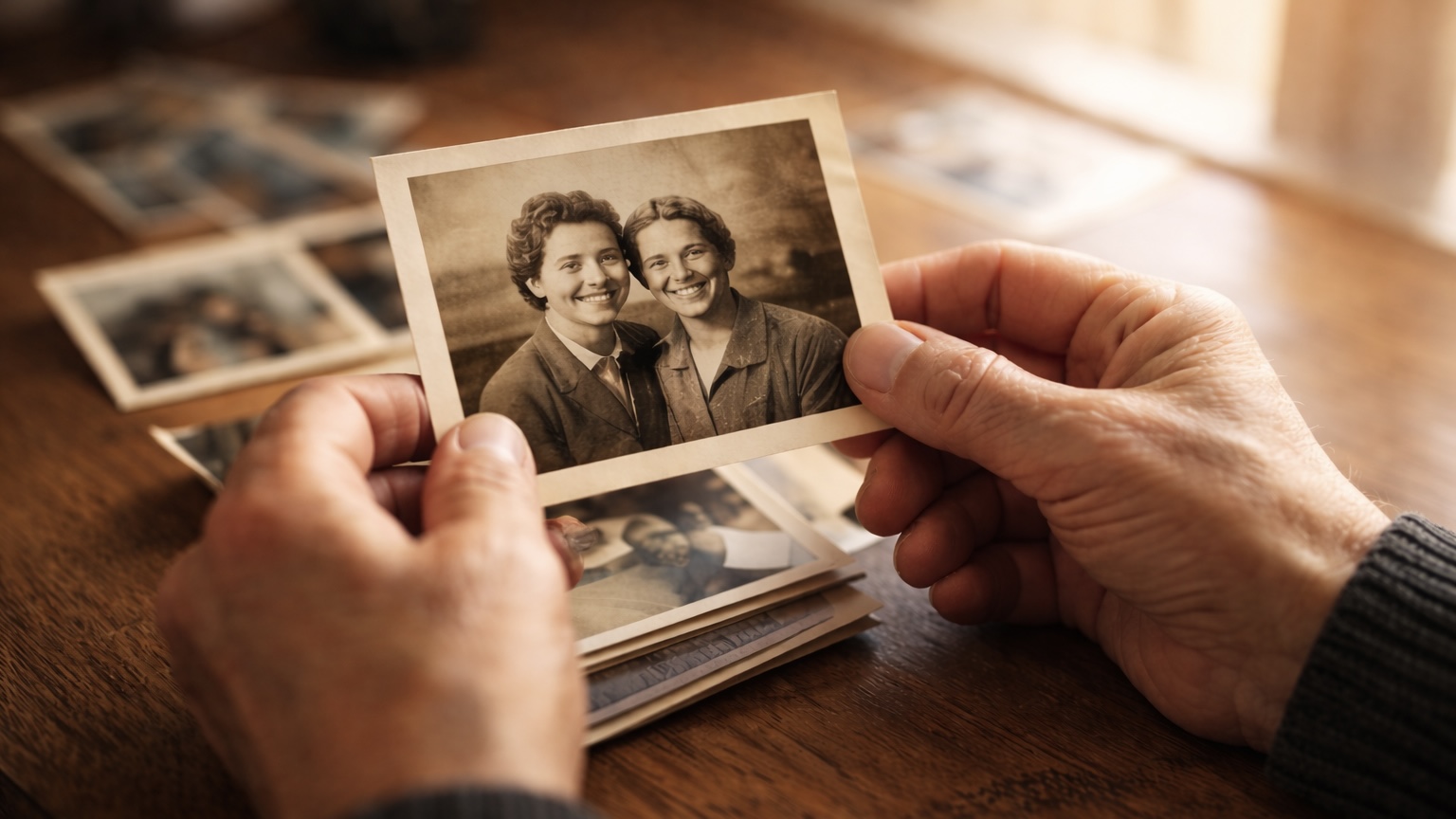
In most families, stories survive one generation. Maybe two. Photos end up in boxes or cloud storage. Videos get buried in folders no one opens. Journals stay in drawers. You can look at all of it, but you can't talk to any of it. You can't ask a follow-up question. You can't hear what your grandmother would have said about something that hadn't happened yet when she was alive.
According to Ancestry, 84% of Americans say knowing their heritage is important — but most families lose the person behind the records within a single generation.
How AI Changes That
Living forever through AI works by capturing what a person actually said, believed, and experienced — through structured interviews, voice recordings, and personal stories — and organizing that material so it can be retrieved later through conversation.
The difference between this and a photo album is interaction. Your grandchild doesn't just see you. They ask you why you made the choices you made, and they hear your voice explain it in your own words. The system only draws from what you actually provided — it doesn't guess, infer, or pull from the internet.
That combination — your real voice, your real stories, retrieved accurately — is what makes this an interactive family legacy rather than a digital scrapbook. And understanding what interactive family legacy actually means starts with that distinction between storage and conversation.
Digital Immortality Is Not What Most People Think
The phrase gets attached to this concept often, and it creates the wrong picture. This is not consciousness transfer. It's not uploading a mind. And it's not trying to replace the person.
It's closer to what you'd get if you could sit your mother down for fifty hours of the most honest, structured conversations she's ever had — and then give your grandchildren a way to access that material by asking their own questions. The AI doesn't become her. It holds what she chose to share and presents it accurately.
Responsible AI legacy preservation is built on that restraint. If something was never shared, the system says so — it doesn't invent an answer.
Why Families Are Starting Now
Three things came together at the same time. AI became capable enough to handle conversational retrieval from personal databases. Voice and video technology reached a quality level where it feels natural, not robotic. And the cost dropped to where everyday families can afford it — not just research labs.
The demand was already there. The genealogy market was valued at $6.6 billion in 2024 — and projected to reach $16.6 billion by 2032, according to a 2024 Kings Research report, and the appetite for deeper preservation is growing fast. If you've spent years building a family tree on Ancestry.com or interactivegenealogy.com, you already understand what records alone can't capture. Living forever through AI is the next step — preserving the voice, the perspective, and the stories that no document can hold.
What This Means for Your Family
You don't need to AI clone yourself in some sci-fi sense to leave something meaningful behind. You don't need a digital afterlife. You need to sit down, answer questions honestly, and let a structured process capture what matters while you're still here.
If you want to preserve your legacy after death, the window for doing it well is while you're alive. That's true whether you're doing it for yourself or helping a parent capture their stories before the chance is gone.
The result is something your children and grandchildren can actually talk to — an AI digital twin built from your real words, your real voice, and your real perspective. Not a replacement for you. A way to make sure the people who shaped your family don't disappear from it.
The Bottom Line
Living forever through AI doesn't mean living forever. It means your great-grandchild can ask you a question and hear you answer — in your own voice, from your own stories — long after you're gone. The technology is here. The only thing that can't be recovered is time.
Frequently Asked Questions
Q: Can AI really let someone live forever?
A: Not literally. AI preserves a person's voice, stories, and personality so future generations can interact with that material through conversation — but it doesn't create consciousness or awareness.
Q: How does AI preserve someone's personality?
A: Through structured interviews, voice recordings, and personal stories captured while the person is alive. AI organizes this material into a knowledge base that family members can access by asking questions.
Q: Is living forever through AI the same as uploading consciousness?
A: No. There is no consciousness involved. AI legacy preservation captures and retrieves real information a person chose to share — it doesn't replicate a mind or create awareness.
Start the conversation today at Living Forever — AI.
About the Author
Brian Will is an entrepreneur and author who has founded, scaled, and exited multiple companies across several industries. He is the founder of Brian Will Media and Living Forever — AI, where he is building the future of interactive family legacy — preserving memory, voice, and perspective through AI.