Using AI to Create Your Digital Twin
An AI digital twin is a digital version of a real person — built from their voice, stories, and personality, captured while they're alive. It's not a clone. It's not conscious. It's a way to preserve how someone actually spoke and what they actually believed, so the people who love them can still hear it after they're gone.
What a Digital Twin Actually Looks and Sounds Like
Imagine your daughter, thirty years from now, pulling up a conversation with you. She sees your face. She hears your voice. She asks you what you were thinking when you started your business, or what your father was like, or what advice you'd give about raising teenagers.
And you answer — in your own voice, in your own words, from stories you actually told.
That's what an AI digital twin makes possible. It's not generating answers from the internet. It's retrieving what you specifically provided through structured interviews, voice recordings, and personal stories. The AI organizes that material so it can be accessed through conversation — and it stays grounded in what you actually said.
What Goes Into Building Your Digital Clone
It starts with structured capture — guided interviews designed to draw out the stories, opinions, beliefs, and experiences that make you who you are. Not just the highlights. The way you think through problems. The values you hold. The things you'd want your grandchildren to understand.
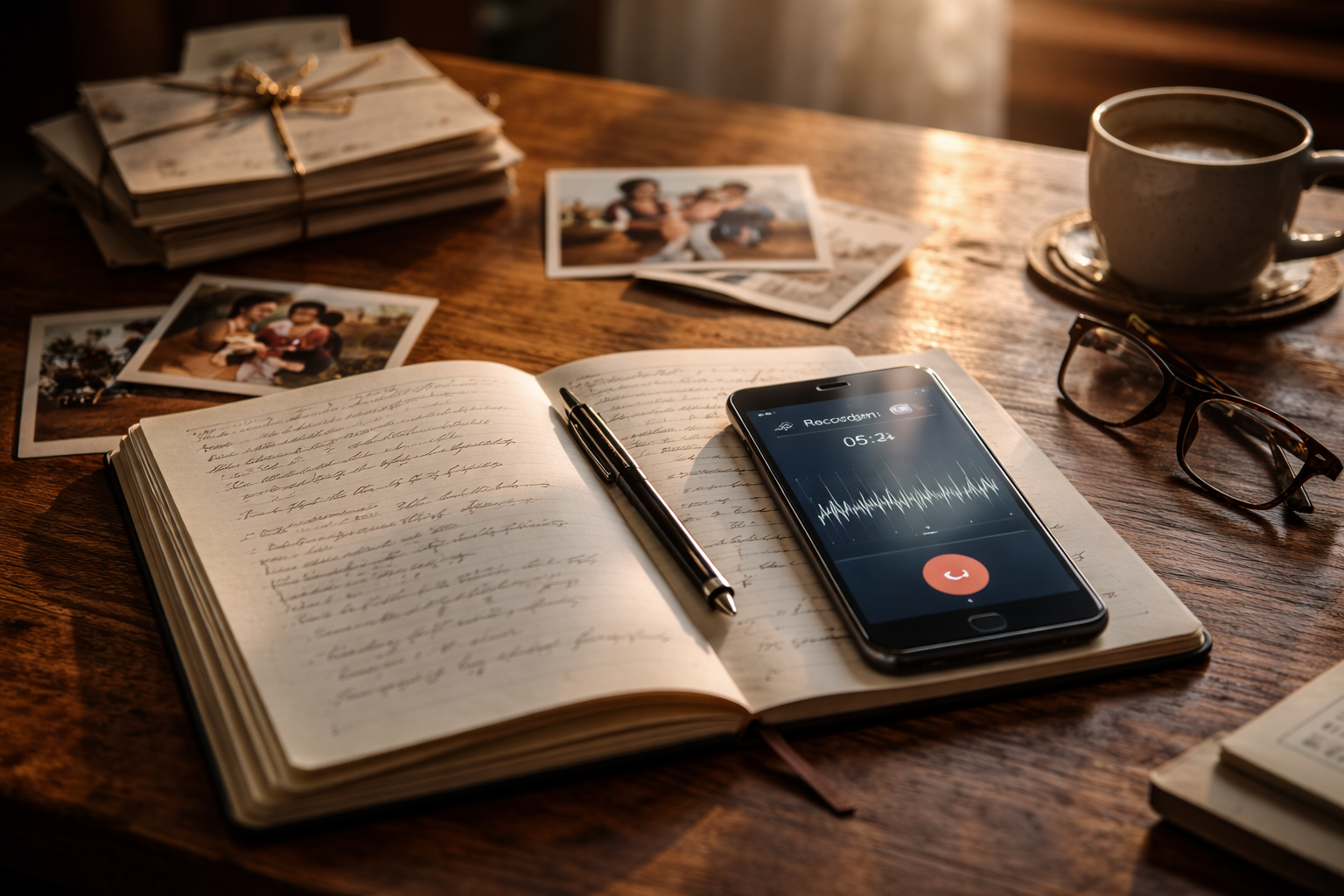
Voice recording is part of the process. AI can reproduce how you speak — your tone, your pacing, the rhythm of how you tell a story. But voice without substance is just familiar sound. The real depth comes from what you choose to share.
That's what separates a responsible digital twin from a digital clone built on scraped data. A responsible system is built on intentional input — not social media posts or public records, but material you deliberately provided. That's the foundation of what we call interactive family legacy.
Why Structured Capture Matters More Than Volume
You don't need thousands of hours of recordings to make an AI version of yourself. What you need is structure.
According to a 2022 YouGov survey, 47% of Americans regret not recording a loved one's voice before they died. That regret usually isn't about quantity — it's about having nothing at all. Even a few hours of structured, intentional conversation can capture enough to build something meaningful.
Random uploads don't work. A pile of photos, scattered voice memos, and old posts won't produce something that feels like you. Structure is what turns raw material into a digital twin that actually represents how you think and speak. If you're thinking about doing this for a parent, preserving their stories starts with asking the right questions in the right order — and the growing community around family preservation, from Ancestry.com to interactivegenealogy.com, is making it easier to know where to begin.
What AI Can and Cannot Do
AI can organize information, reproduce voice, and retrieve stored material accurately. What it cannot do is become you. It doesn't have awareness. It doesn't form opinions on its own. And it doesn't fill in gaps with guesses.
If you never talked about a topic, the system should say so — not invent a plausible-sounding answer. That restraint is what separates a responsible platform from one that prioritizes sounding impressive over being accurate.
The goal isn't to make an AI of yourself that thinks independently. It's to leave something your family can trust — something that sounds like you because it's actually built from your words. That's what interactive family legacy actually means — and it's fundamentally different from the idea of using AI to clone yourself.
The Difference Between a Digital Twin and a Chatbot
A chatbot generates text. An AI digital twin — especially one with video AI — has your face, your voice, and your mannerisms. When your grandchild interacts with it, they're not typing into a search box. They're having a conversation with someone who looks and sounds like you.
That changes everything about what accuracy means. A chatbot can get things wrong and still be useful. A digital clone that looks like your grandfather and says something he never believed breaks trust in a way that's hard to repair.
Living Forever — AI is developed under Brian Will Media, where storytelling, narrative accuracy, and long-form perspective are foundational to how the platform works — because when you're representing a real person, getting it right matters more than getting it fast.
The Bottom Line
An AI digital twin isn't about technology. It's about what you want the people you love to have after you're gone — your voice telling your stories, your way. The AI just holds what you chose to give it. Everything real about it comes from you.
Frequently Asked Questions
Q: What is an AI digital twin?
A: An AI digital twin is a digital representation of a real person — built from their voice, stories, opinions, and personality, captured intentionally while they're alive. Family members can interact with it through conversation.
Q: Can AI clone my personality?
A: AI doesn't clone personality. It captures and organizes what you share — voice recordings, personal stories, written answers — and retrieves that material accurately when your family asks questions.
Q: How much information do you need to create a digital twin?
A: A meaningful digital twin can be built from several hours of structured interview material combined with voice recordings and personal writings. Structure matters more than volume.
Start the conversation today at Living Forever — AI.
About the Author
Brian Will is an entrepreneur and author who has founded, scaled, and exited multiple companies across several industries. He is the founder of Brian Will Media and Living Forever — AI, where he is building the future of interactive family legacy — preserving memory, voice, and perspective through AI.